Anti-hail net
Types of anti-hail nets installation
What type of net installation should I choose? Elastic? Inclined? Horizontal?
Not being an expert in this field, it is difficult to choose the right option that will solve the problem. Soil characteristics, morphology and behavior of various fruit trees, planting scheme and climatic conditions – all these factors determine the type of installation that is most suitable for crop protection.
Systems that have proven themselves to be the best among colleagues will not necessarily be effective for the characteristics of your garden. Materials and installation techniques may differ in different industries.
Before deciding on an investment, we recommend that you contact our specialists. They will analyze the environmental conditions in your region, offer the best option for protecting your plantations, taking into account your requirements in the price / quality ratio category.
Inclined type of hail net installation
Installations with inclined nets are a classic design for protecting orchards from hail. Such systems first appeared in the sixties and are still the most common and most reliable. They are most widely used in orchards with wide row spacing.
The main advantages of the inclined net installation are increased reliability, since the entire structure does not become heavier than the mass of the hail, and the system is also easy to handle.
The inclined net provides instant hail drainage into the row spacing. The system is controlled at the height of the lower connection of the net, and not at the top of the pole.
Horizontal type of anti-hail net installation
Horizontal net installations are the most common today. They are very easy to install, they are used in pear and apple orchards.
Such systems are widely popular due to the low cost of installation and material compared to installations with an inclined net. The height of the posts is minimal, usually cement posts are used.
On the other hand, the horizontal net structure has the disadvantage of quite high (compared to installations with an inclined net) annual maintenance costs.
In addition, the entire installation is under quite high pressure, so special attention should be paid to the anchorage and the central hail drainage system. In addition, the height of the posts is directly related to the height of the net and thus complicates tree care.
Installation with rubber mounts
An interesting variant of the horizontal mesh installation is the system with rubber mounts. Originating in France, this system quickly spread in Italy, thanks to its ease of installation. The system with rubber mounts, compared to traditional systems, guarantees high-quality protection of the garden at limited costs. The height of the posts is lower than with the inclined mesh system.
The main disadvantage is the maintenance of the rubber mounts, which must be changed periodically, which significantly affects the annual cost of maintenance.
The system with rubber mounts involves the application of layers of mesh, which creates a certain shading of areas of the garden. This is a very important aspect that should be taken into account when selecting a mesh.
Specifications:
Composition and types of nets
HIGH DENSITY POLYETHYLENE (HDPE) ANTI-HAZE NET
High density polyethylene (HDPE) is produced from oil. It is used to produce many other products, including monofilaments.
However, monofilament (HDPE), like all materials, both natural and artificial, is prone to deterioration or partial loss of their physical and mechanical properties.
Many factors affect the deterioration of the polymer, including wind, rain, UV radiation, and the effects of chemical treatments, which ultimately lead to deterioration of the materials.
It is very important to take all these elements into account, because it is necessary to add specific stabilizing additives to the initial polyethylene, which protect against UV rays and allow to extend the life of the protective nets.
Types of protective nets
Our nets are used not only to protect fruits and vegetables from hail.
Shading nets (to prevent spots on fruits. Spots associated with excessive sunlight (it has been proven that fruits are better preserved at 15% shading)
- Anti-bird nets
- Windproof nets
- Anti-insect nets
The following rules must be followed for the production of the net.
QUALITY COMES FIRST
The installation of all production phases is aimed at obtaining anti-hail nets of the highest quality in terms of stability and durability. The search for the highest quality nets with special characteristics of density and molecular distribution, exclusive formulas with the addition of stabilizing materials, the use of the most modern equipment – all this guarantees safety and quality.
MAIN STAGES OF METS PRODUCTION
- Extrusion of monofilament
- Transitional process
- Weaving
- Extrusion
Starting with the processing of high-density polyethylene (HDPE), through the extrusion phase, monofilament is produced. This is a very delicate operation. To obtain better viscosity together with the elasticity of the monofilament, it is necessary to use high-quality equipment.
Transitional process
In this process, the desired number of monofilaments, previously processed in the previous phase, is prepared around a metal support, arranging them in order. After that, the prepared material is fed into the textile machine.
Weaving
After numerous applications and comparisons, it was universally agreed that the best treatment would be a textile treatment called “double helix”. This special treatment allows the threads to close in pairs (like a spiral) in order to stabilize and strengthen the position of the threads in the network. The result of this treatment is a very stable and effective fabric.
You may be interested in
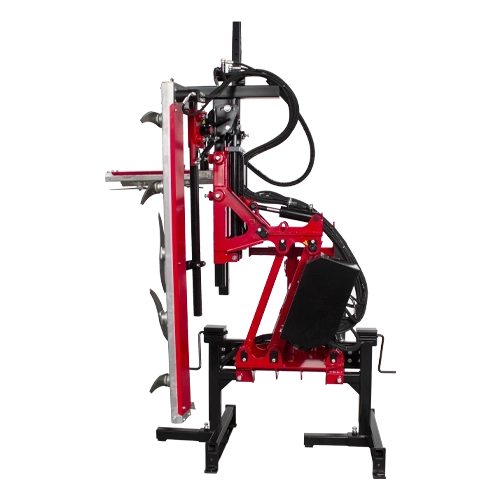
L-shaped Trimmer PV-L-R
L-shaped PV-L-R trimmer for fast and precise canopy control in vineyards and hedges.
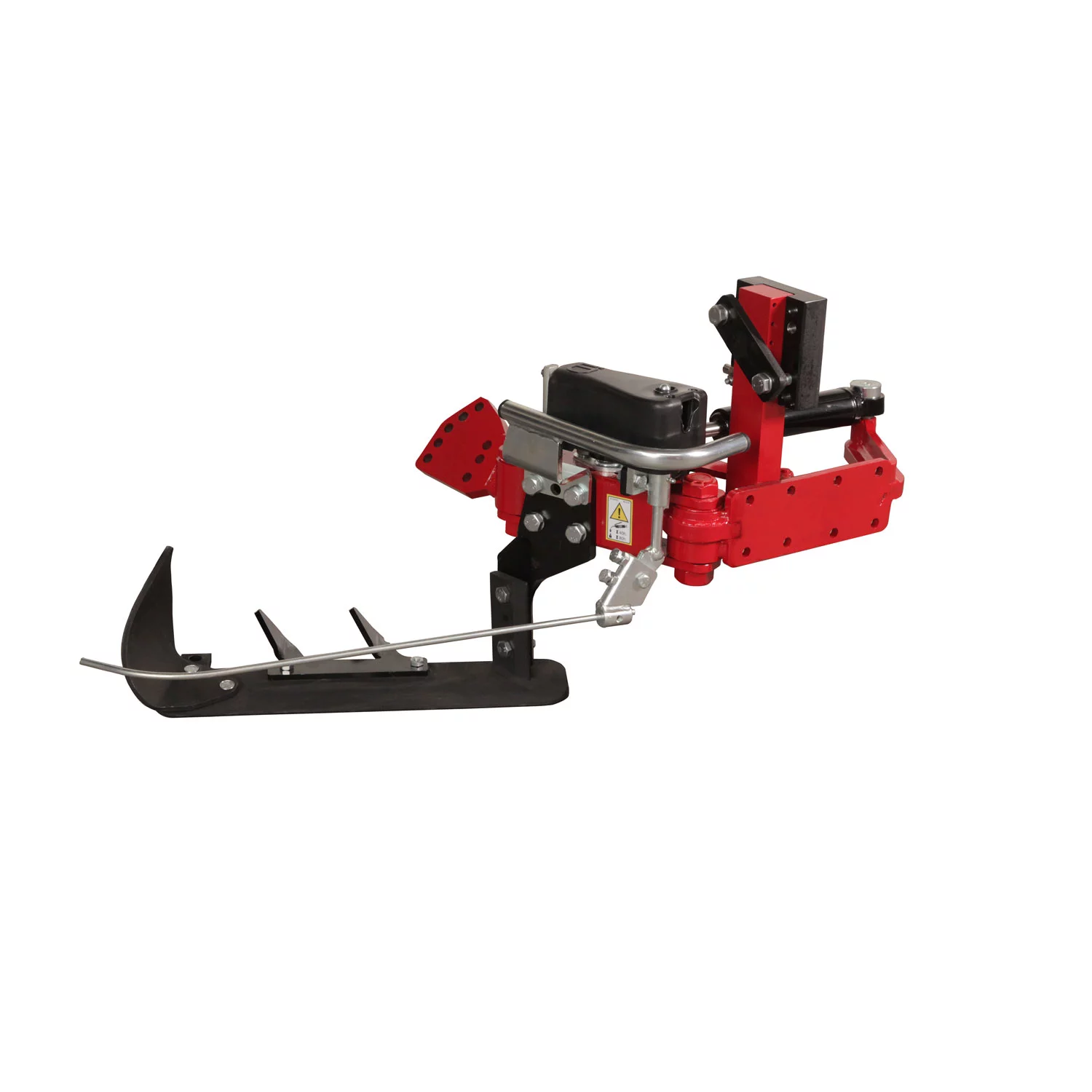
Electrohydraulic In-row Weeder ID-WEEDER
Electrohydraulic ID-WEEDER for precise weed control in orchards and vineyards.
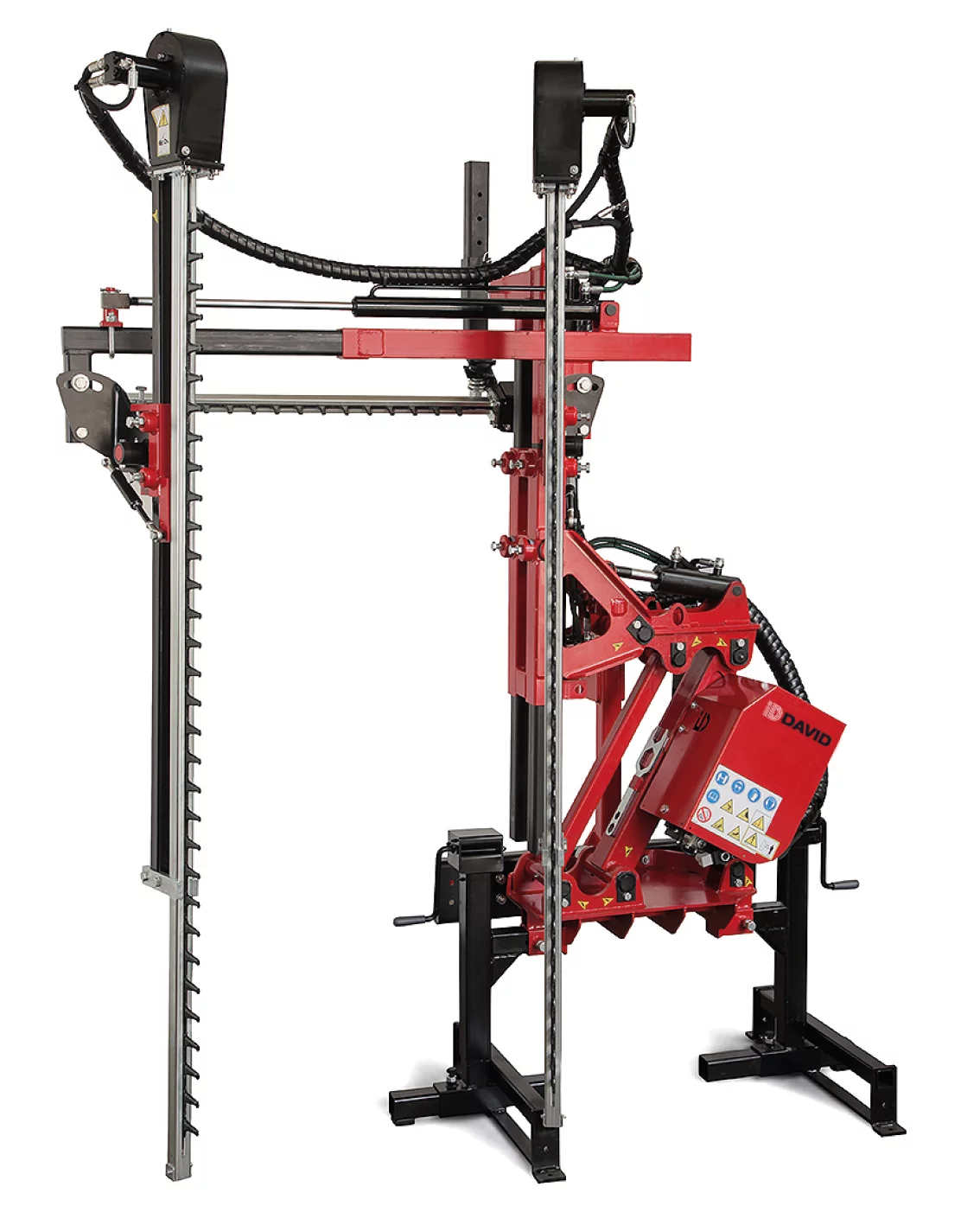
PV-TUNEL Inverted U-Type Cane Trimmer
PV-TUNEL inverted U-type cane trimmer for fast and precise canopy management in vineyards and hedges.